Start with the silhouette, not the label
A chair described as “Swedish” might be an antique, a recent reproduction, or simply a design influenced by Swedish interiors. To understand it, begin with what you can see: the shape of the back, the relationship between seat and legs, and whether the frame looks carved, turned, bent or assembled from straight pieces. These clues are more useful than a pale paint color alone.
Sweden Culture Guide is an independent culture magazine, not a consulate or government service. This guide is about appreciating design, rather than certifying a chair’s provenance. Swedish makers have worked in many traditions, and recognizable forms have also been made outside Sweden. Look for a combination of features before assigning a style, and keep questions of maker and age separate from questions of appearance.
Gustavian chairs: restrained ornament and upright lines
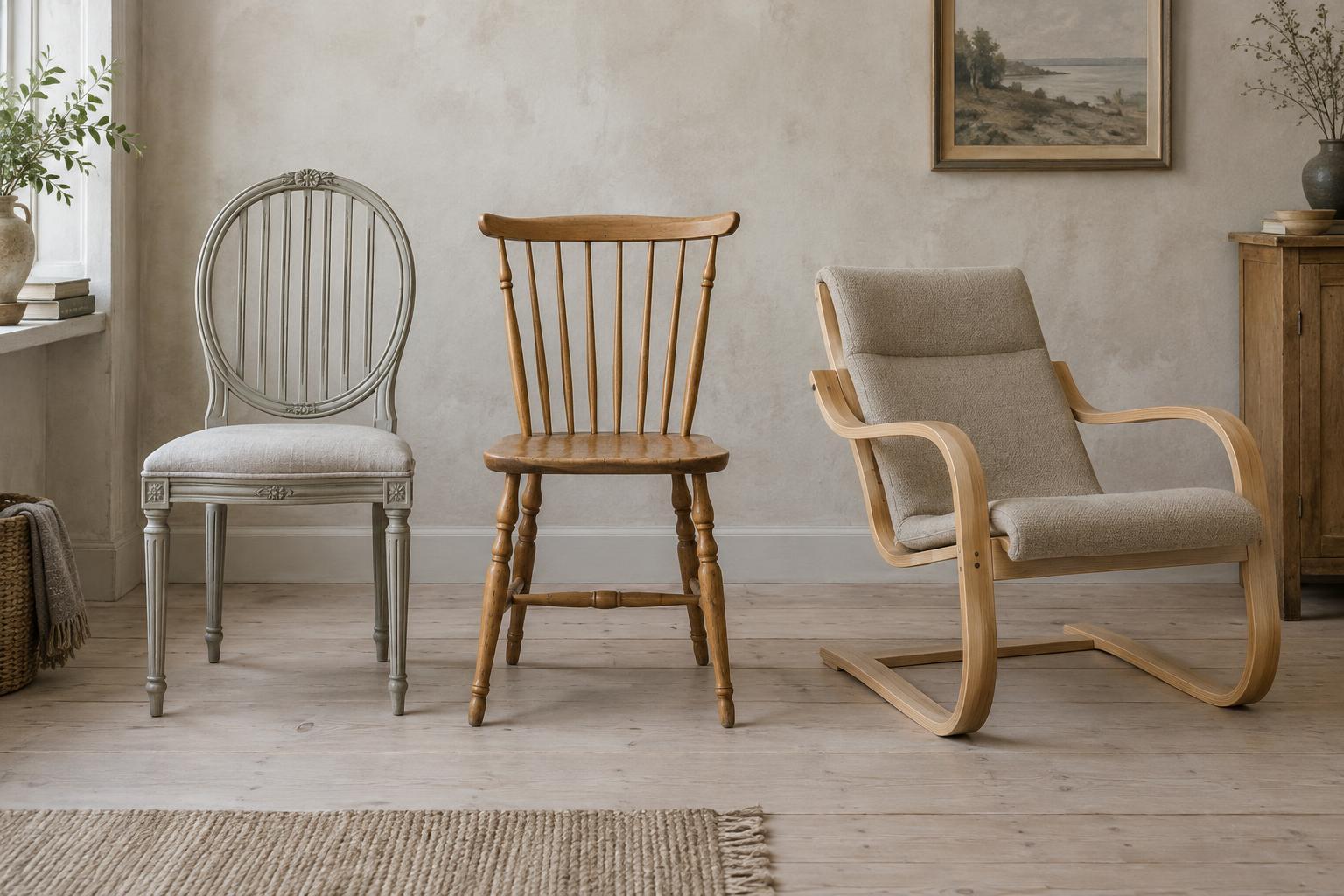
Gustavian-style seating is often recognized by its orderly, upright proportions. A dining chair may have a shaped or gently rounded back, a framed upholstered seat, and straight legs with fluting or other modest carving. Painted finishes, including light tones, are common in interiors associated with the style. Look past the color to the structure: a carved or molded wooden frame carries the seat, while the legs and rails give the chair its composed outline.
“Gustavian” describes a design language, not an automatic date. Later workshops and contemporary manufacturers have repeatedly interpreted its forms. Fresh upholstery, a uniform painted surface or crisp decoration may reflect restoration or reproduction, but none of those details settles the question on its own. If you are comparing chairs, notice how deeply the ornament is cut, how the back meets the seat rail, and whether all the parts seem to belong together.
Pinnstolar: the everyday stick-back chair
The pinnstol, or stick-back chair, is a familiar form in Swedish dining rooms and kitchens. Its most obvious feature is a row of slender sticks or spindles rising from a solid seat toward a back rail or curved crest. Many examples have turned legs and stretchers beneath the seat. The result can look light and open even when the chair is sturdy enough for daily use.
Construction matters as much as silhouette. The spindles and legs generally fit into holes in the seat; stretchers help tie the legs together. Viewed from underneath, you may be able to see how the parts are seated and whether any joints have loosened. Not every spindle-back chair is a pinnstol, and pinnstolar vary in the shape of their seats, crests and turnings. Compare those details rather than expecting one fixed template.
Modernist chairs: curves made through construction
Swedish twentieth-century chair design also includes forms that look very different from painted wooden dining chairs. In work associated with modernist designer Bruno Mathsson, for example, a relaxed sitting position, curved wooden supports and woven or upholstered surfaces can be central to the design. The profile often tells the story: instead of an upright back and separate flat seat, the chair follows the body through a longer, more continuous curve.
When examining a curved chair, ask how that curve was made. Thin layers of wood bonded together can form a laminated member; that is different from bending a single solid piece of wood. Webbing or upholstery may span the supporting frame rather than sit within a traditional seat rail. These methods affect both the chair’s appearance and the way it carries weight. A sweeping outline alone does not establish a designer or model, so check for reliable identifying details before making an attribution.
What to inspect before bringing one home
Turn a chair around and look underneath. Check where legs enter the seat or meet the rails, whether stretchers are secure, and whether the back moves independently of the frame. On an upholstered chair, look for a sound frame beneath the covering; fabric can hide as much as it reveals. Worn paint and small variations can be part of an older chair’s character, but wobbling joints deserve attention if the chair is meant for regular use.
Finally, consider the chair in its intended setting. A pinnstol’s compact, open back may suit a crowded table, while a Gustavian-style chair can bring a more formal rhythm to a room. A low, curved lounge chair asks for space and a different sitting posture. Recognizing these forms is not about finding a single definition of Swedish design. It is about seeing how proportion, material and construction turn a practical object into a distinctive one.