Two familiar buns, two different spices
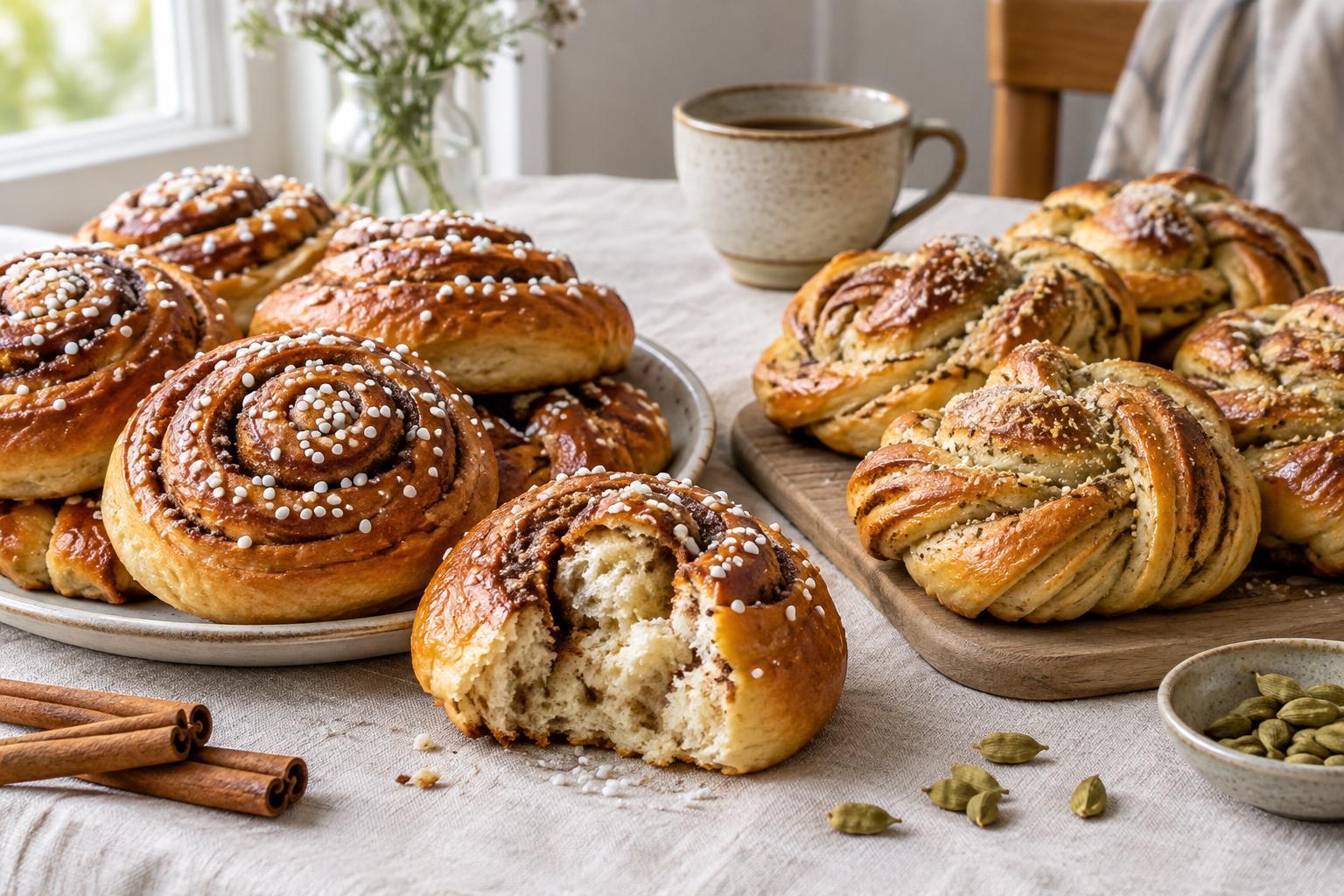
In Sweden, a cinnamon bun is a kanelbulle, while a cardamom bun is a kardemummabulle. Both are sweet, yeast-raised buns often enjoyed with coffee during fika, a pause for conversation and something to eat. They have much in common: a soft dough, a buttery spiced filling and a golden baked surface. The choice between them usually comes down to the aroma you want.
Cinnamon brings a warm, sweet flavor that is familiar even before the first bite. Cardamom is more fragrant and complex, with a gently citrus-like, herbal edge. That contrast is clearest in the filling, but the names do not describe every ingredient: a cinnamon bun may also have cardamom in its dough. Recipes and bakery styles vary, so the spice in the filling is a better guide than the shape or topping alone.
This article is from an independent culture magazine, not a consulate or government service. Here, the focus is on the pleasure of recognizing, making and sharing these buns.
What goes into the dough and filling
A typical home version starts with a lightly sweetened yeast dough containing flour, milk, butter and a little salt. Some bakers add ground cardamom to the dough for either style of bun. The filling is usually a spreadable mixture of softened butter, sugar and the featured spice. Cinnamon tends to give the finished bun a mellow, rounded sweetness; cardamom can taste brighter and more aromatic, especially when freshly ground.
For cardamom buns, grinding the seeds from cardamom pods shortly before baking can make the flavor more noticeable. Ready-ground cardamom is convenient, but its aroma may fade during storage. If you are unsure how much to use, begin with a modest amount and adjust in a later batch rather than adding so much that the spice overwhelms the dough. The same restraint helps with cinnamon: the goal is a balanced bun, not a dry layer of spice.
An egg wash can add shine, while pearl sugar gives a light crunch. Some buns instead receive a little sugar syrup after baking. Neither finish belongs exclusively to one spice. If you want to compare the flavors side by side, use one dough, divide it in half and make a separate filling for each portion.
Spirals, twists and knots
The shape affects how each bun looks and how its filling is distributed, but it is not a strict rule. To make a spiral, spread filling over rolled-out dough, roll it into a log and cut it into rounds. The result is easy to portion and shows off a clear swirl. For a twist or knot, fold the filled sheet of dough, cut it into strips, gently twist each strip and coil it into a loose bun. Knots expose more edges, which can become pleasantly golden in the oven.
Give either shape room on the baking tray. Buns expand during their final rise and again as they bake, and crowded pieces may join together. If a knot looks uneven, there is little reason to worry: its layers will settle as the dough rises. More important is keeping the filling inside the bun as you shape it, rather than squeezing out most of the butter and sugar.
Baking tips for soft buns with golden edges
Aim for dough that feels soft and manageable rather than stiff. Add flour gradually when mixing and use only enough on the work surface to stop serious sticking. Too much extra flour can make the buns dense. After kneading, let the dough rise until it has visibly expanded; the time will depend on the recipe and the warmth of the room. Once shaped, let the buns become puffy before baking rather than relying on the clock alone.
Bake according to your recipe and watch the buns near the end, since size, shape and ovens differ. They should be golden on top and baked through at the center. If they brown too quickly while the middle still looks doughy, a slightly lower oven temperature may help on the next batch. Let them cool briefly before eating: the filling will be very hot straight from the oven.
Both kinds are especially inviting when fresh. If you are baking ahead, let the buns cool completely before storing them, then warm them gently when it is time for fika. Make both versions for a small tasting: a cinnamon spiral beside a cardamom knot is an easy way to discover which spice, texture and shape you prefer.