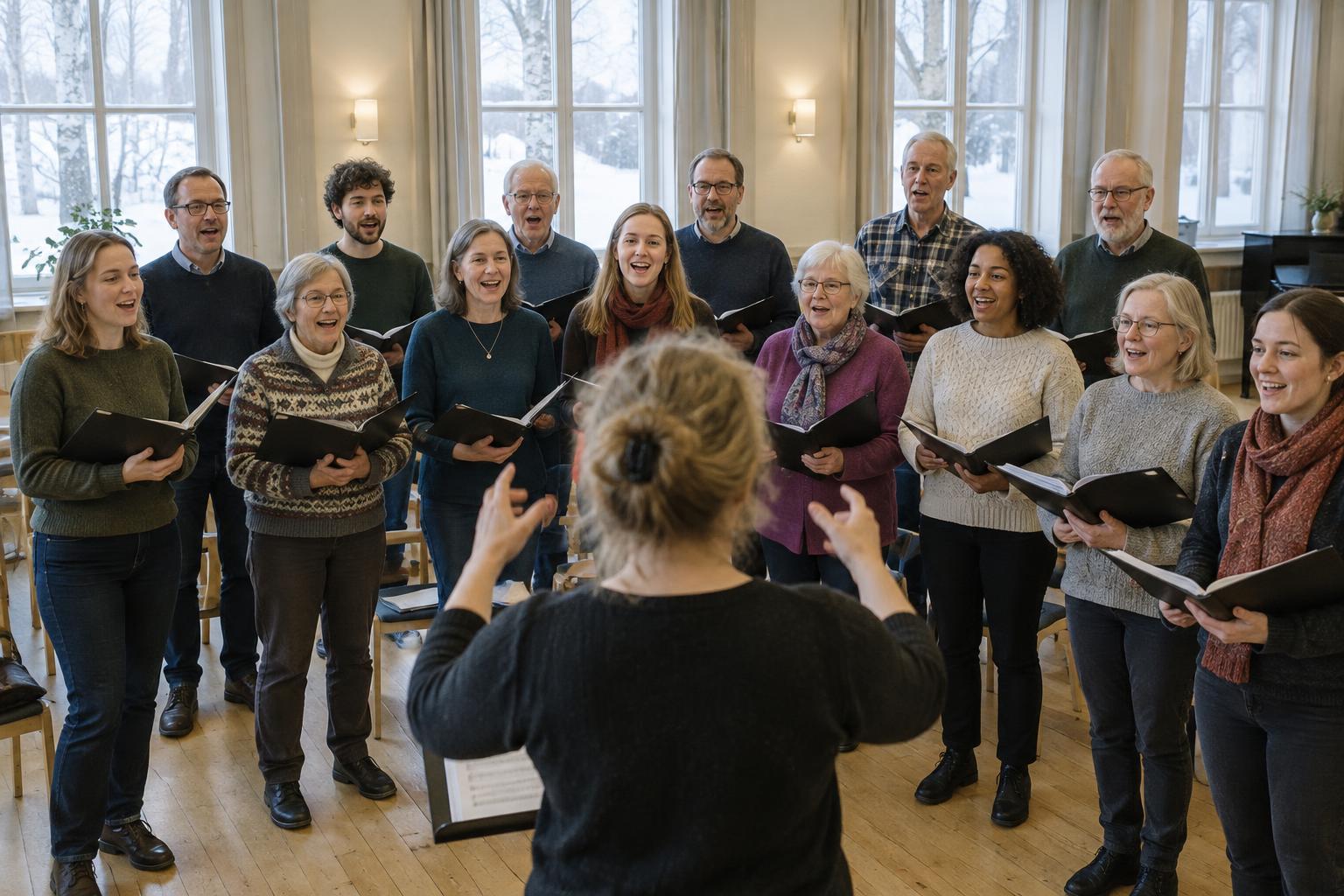
Many kinds of choir, one shared activity
Choral singing in Sweden is not confined to concert halls. You might encounter a choir in a church, at a university, in a community association or at a seasonal gathering. Some groups work toward demanding performances; others meet chiefly for the pleasure of singing together. Their repertoires can range from traditional songs and sacred music to contemporary arrangements.
That variety helps explain the tradition’s staying power. A person does not need to be a soloist to contribute to a choir. Each singer learns a part, listens to the others and helps create a sound that no one member could make alone. The result can feel both personal and collective: the voice is your own, but the music depends on the group.
A tradition with several roots
Church music has long provided a setting for group singing in Sweden, and church choirs remain one visible part of the picture. Secular associations, schools and student groups have also given people opportunities to sing. It is more useful to think of Swedish choral life as a collection of overlapping traditions than as a single style or institution.
Choirs can offer a regular meeting place as well as a musical one. Rehearsing week after week gives members time to learn unfamiliar songs, develop their voices and get to know people outside their usual circles. This social side matters in groups where the aim is not only a polished performance. It also helps make singing together an activity people can return to at different stages of life.
None of this means that every Swede belongs to a choir or feels comfortable singing. Interests and opportunities vary. The point is that choir singing has recognizable places in community life, making it easier for new groups to form and for curious singers to find them.
How the seasons give songs a place
Swedish celebrations often create occasions for shared music. Lucia events in December, for example, commonly feature singers and familiar seasonal songs. Summer gatherings may include group singing too, though the setting and repertoire differ from a choir concert. Such occasions let people hear songs repeatedly and associate them with particular times of year.
A choir can give these songs new life. Rehearsal allows singers to work on harmony, phrasing and expression, while a performance offers listeners a chance to experience familiar music in a different way. Seasonal concerts may also bring together people who do not otherwise attend choral events. At the same time, Swedish choirs are not limited to holiday music: many sing throughout the year and explore a wide range of material.
What singing together asks of people
In a choir, listening is as important as producing sound. Singers follow a conductor or group leader, watch for entrances, adjust their volume and notice how their line fits with the others. Those small acts of attention can make a rehearsal satisfying even before a piece is ready to perform.
Choirs also make room for different levels of experience. Some expect members to read music or audition; others teach parts by ear and welcome beginners. A singer who is unsure about their voice may find it easier to start within a section than alone in front of an audience. Regular attendance and a willingness to practise are often more useful than confidence on the first day.
Finding a way to take part
If you are interested in joining a choir in Sweden, begin with the kind of experience you want. Would you prefer an informal group, a church choir, a student ensemble or a performance-focused choir? Ask about language, rehearsal times, repertoire and whether there is an audition. Listening to a concert or visiting a rehearsal, when a group allows it, can help you judge whether its pace and atmosphere suit you.
Even if you never join, attending a local performance is a way to understand the tradition. Notice how the singers respond to one another as well as to the music. Choral singing lasts not because every group sounds alike, but because it gives people a repeatable way to gather, learn and make something together.
Sweden Culture Guide is an independent cultural magazine, not a consulate or government service. It does not handle visas, official appointments or identity documents.