Start with the room, not the wood name
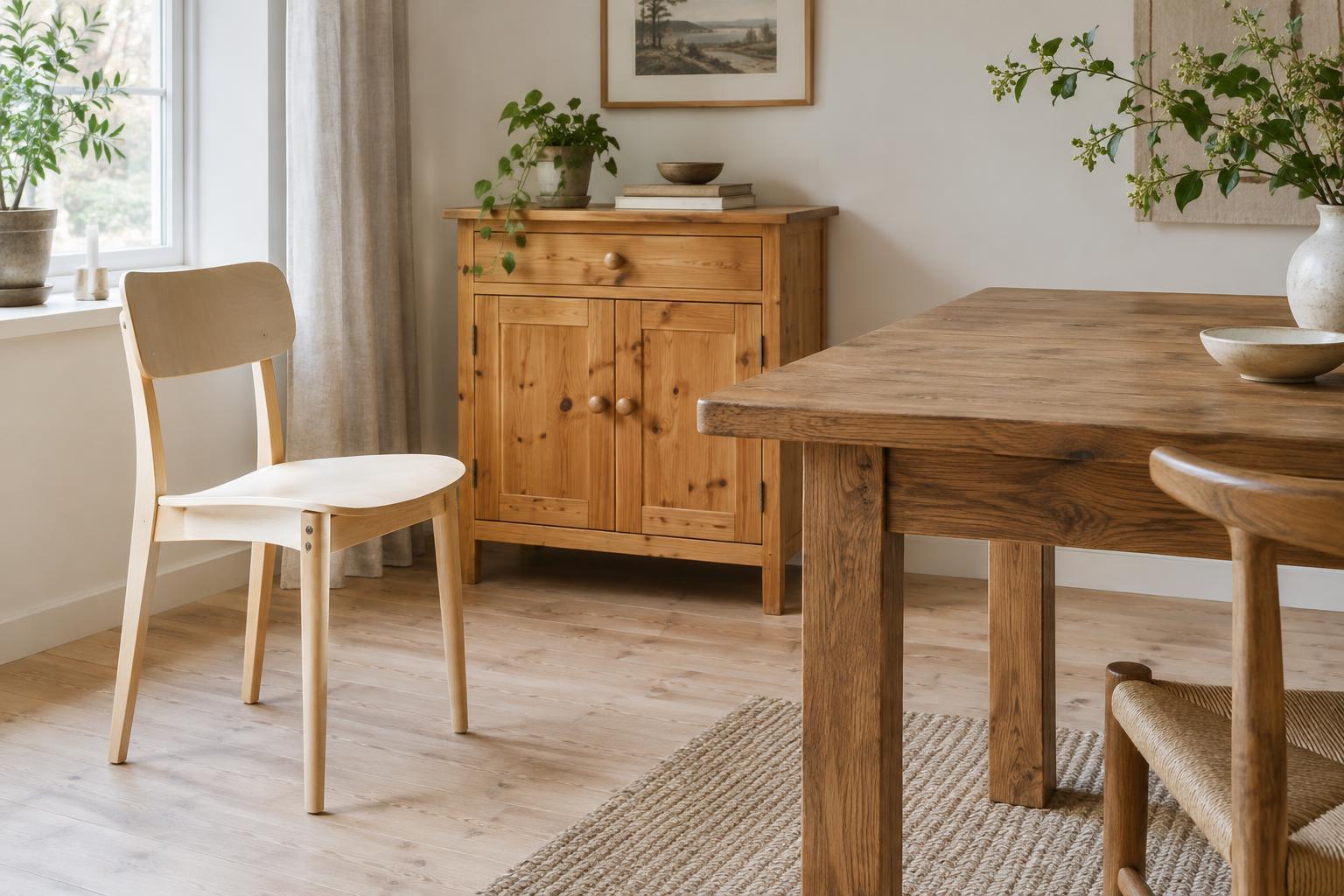
A pale wooden chair, a knotty cabinet and a sturdy oak table can all feel at home in a Swedish-inspired interior. What matters is how the material works with the room’s light, colors and daily use. Birch usually offers a quiet, even surface; pine shows more knots and variation; oak has a more pronounced grain and a substantial feel. None is automatically the most “Swedish” choice. Each lends itself to different shapes and moods.
Before choosing, ask where the piece will sit and what it will need to withstand. A dining table used every day has different demands from a bedroom shelf. Check the finish as well as the species: paint, oil, soap and lacquer can change both a wood’s appearance and the amount of care it needs. Sweden Culture Guide is an independent magazine, not a consulate or government service.
Birch: light color and a calm surface
Birch is generally pale, with a fine, relatively subtle grain. That makes it useful when you want the shape of a piece to stand out without a busy wood pattern. A birch chair or desk can sit comfortably alongside white walls, textiles and stronger accent colors. Its restrained appearance also makes it a good candidate for simple, clean-lined furniture.
Birch is a hardwood, but that does not make it immune to dents, scratches or moisture marks. A clear finish helps protect a tabletop while keeping its light character visible. If you are comparing pieces in a shop, look at them in natural light when possible: pale woods and clear coatings can take on warmer or cooler tones than a product photograph suggests. For a coordinated set, check the individual pieces, since natural wood still varies.
Pine: warmth, knots and an informal feel
Pine often has a warm, light color and visible knots. Those features can give a cabinet, bench or table an easygoing character, particularly in a room with painted walls and simple textiles. Pine also takes paint, so its grain can be either celebrated or covered, depending on the look you want. Unfinished and lightly finished pine may change color with exposure to light, so a piece can develop a different tone over time.
As a softwood, pine dents more readily than birch or oak. That may be perfectly acceptable on a shelf or on furniture where a few signs of use add character. For a heavily used dining surface, consider whether you would enjoy that worn-in look or would rather have a tougher surface. Knots, joints and finish quality deserve attention when shopping: run a hand across edges, look at how doors and drawers fit, and ask how to clean the specific finish.
Oak: visible grain and lasting presence
Oak tends to have a strong, recognizable grain and a denser feel than pine. It can anchor a room as a dining table, sideboard or bed frame, especially when the surrounding furnishings are visually lighter. Its color varies with the wood and finish, ranging from relatively pale tones to deeper browns. If you want a quiet surface, inspect the actual piece rather than relying on the word “oak,” which tells you little about how prominent its grain will look.
Oak is well suited to furniture that sees regular use, though it can still scratch, stain or react to moisture. Spills should be wiped up promptly regardless of finish. Some oak can develop dark marks when moisture and iron come into contact with the wood, a particular consideration for unfinished or worn surfaces. A protective finish and ordinary care are more useful than assuming a hard wood needs no attention.
Make the final choice with finish and construction in mind
Choose birch when you want a pale, understated look; pine when you welcome knots and an informal patina; and oak when you want grain and visual weight. Then look beyond the label. A solid-wood top, a wood-veneered panel and a painted piece can behave and be repaired differently. Veneer is not inherently a poor choice: it can provide a consistent appearance and make efficient use of wood, but deep damage may be harder to repair than on solid timber.
For any of the three woods, follow the maker’s care guidance. Keep furniture away from persistent dampness and excessive heat, use coasters or mats where appropriate, and avoid harsh cleaning products unless the finish instructions allow them. Wood responds to changes in indoor humidity, so small seasonal changes in a solid-wood piece are not necessarily a fault. The best choice is the one whose appearance, construction and likely wear you will still enjoy after the room has been lived in.