Let the host set the rhythm
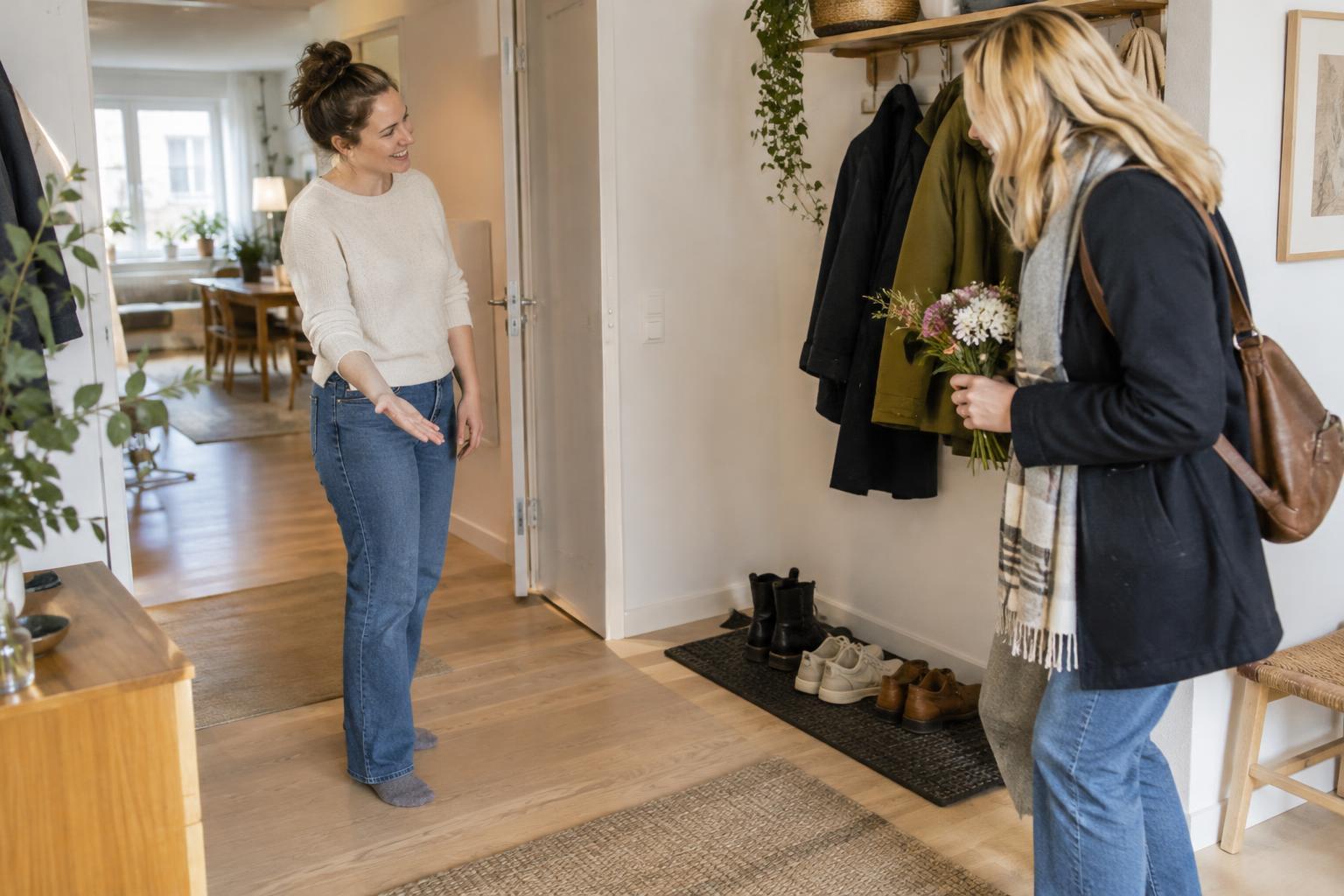
Dinner invitations in Sweden can range from a casual meal around a kitchen table to a carefully planned celebration. There is no single script for every home. When you arrive, notice where the host puts coats and shoes, whether guests are gathering in the kitchen, and when everyone is invited to sit. If you are unsure where to go or what to do, a simple question is more useful than trying to guess a rule.
Sweden Culture Guide is an independent cultural magazine, not a consulate or government service. Our aim here is to help visitors feel comfortable with everyday hospitality, not to prescribe the “correct” way to eat. A considerate guest follows the household’s lead and leaves room for different family habits.
Serving yourself without rushing
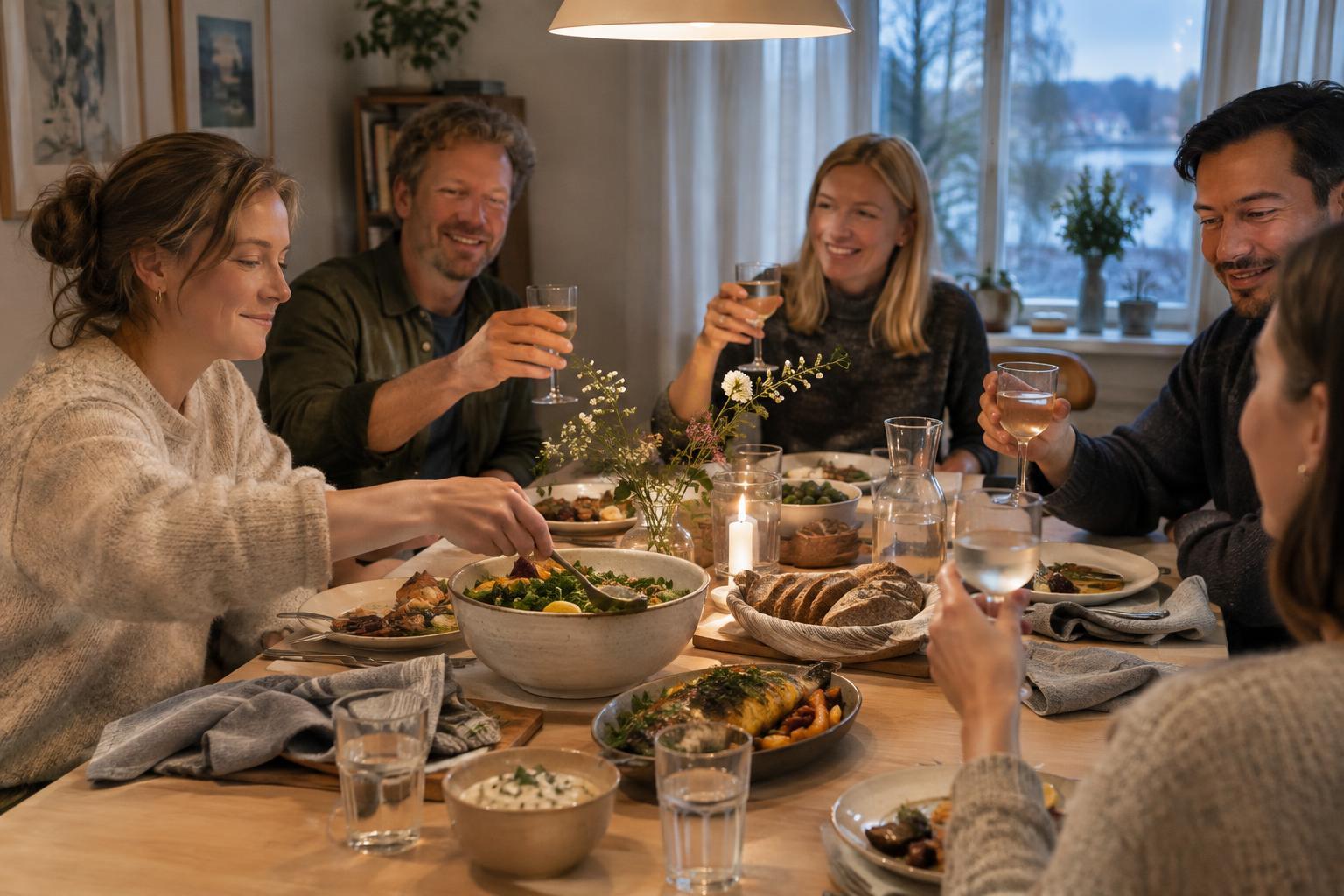
At many informal dinners, food is placed in serving dishes and passed around, or guests are invited to help themselves. Wait until the host indicates that it is time to begin. If a dish is passed to you, take a reasonable first portion and pass it on so everyone has a chance. You can usually take more later if there is enough; the host may even encourage seconds.
Not every meal works this way. A host may plate the food in the kitchen, especially for a smaller gathering or a dish that needs careful serving. If you have a dietary restriction, it is kind to mention it before the meal when possible. At the table, ask what is in an unfamiliar dish rather than assuming. If you are invited to help clear plates or carry something to the table, follow the host’s answer: an offer to help is welcome, but there is no need to insist.
Toasts: join in, but keep it simple
You may hear “skål” when people raise their glasses. It means “cheers,” and you can say it back while lifting your drink. In some groups, people make brief eye contact around the table before drinking; in others, the toast is more relaxed. You do not need alcohol to take part. Water or another drink is fine, and no explanation is required.
At a celebratory dinner, one person may offer a few words before a toast. Let them finish, then join the others. At a quieter meal, there might be one quick skål at the beginning or no toast at all. The safest approach is to watch the host rather than trying to initiate a formal ritual. Being present and friendly matters more than performing every detail perfectly.
Thanking the host at the table
A direct “tack för maten” means “thanks for the food.” It is a natural way to show appreciation after a meal, especially when someone has cooked for you. You can also say in English that you enjoyed the meal. A specific, sincere comment about a dish can be lovely; exaggerated praise is not necessary.
If dessert or coffee follows, you need not treat the main course as the end of the visit. Follow the pace of the gathering, and thank the host again when you leave. For a meal with close friends, that may be a quick, warm goodbye. For a more formal invitation, it may be worth taking a moment to thank whoever cooked and whoever welcomed you into the home, if they are different people.
A thank-you after the visit
You might hear the phrase “tack för senast,” roughly “thanks for last time,” when people next meet after a visit. A short message after dinner works well too: thank your host for the evening and, if you like, mention something you enjoyed. There is no need to write an elaborate note for an ordinary meal.
Small gestures carry the most weight when they feel genuine. Arrive at the agreed time, listen when the host explains how the meal will work, and be open to conversation without worrying about perfect etiquette. Swedish dinner tables differ as much as the people around them. If you serve others thoughtfully, join a toast when one happens, and say thank you, you will have the essentials covered.