A freedom built on consideration
Allemansrätten, often described in English as Sweden’s right of public access, lets people enjoy much of the countryside whether or not they own the land. It is a way to take a walk through a forest, pause beside a lake or gather some wild berries. The guiding idea is simple: do not disturb people and do not damage nature.
It is not permission to go everywhere or do anything outdoors. Homes, working land, wildlife and sensitive habitats all need space. Local restrictions may apply, particularly in nature reserves and national parks. Sweden Culture Guide is an independent magazine, not a consulate or government service; this article is a starting point for thoughtful visitors, not official guidance.
Where you can walk
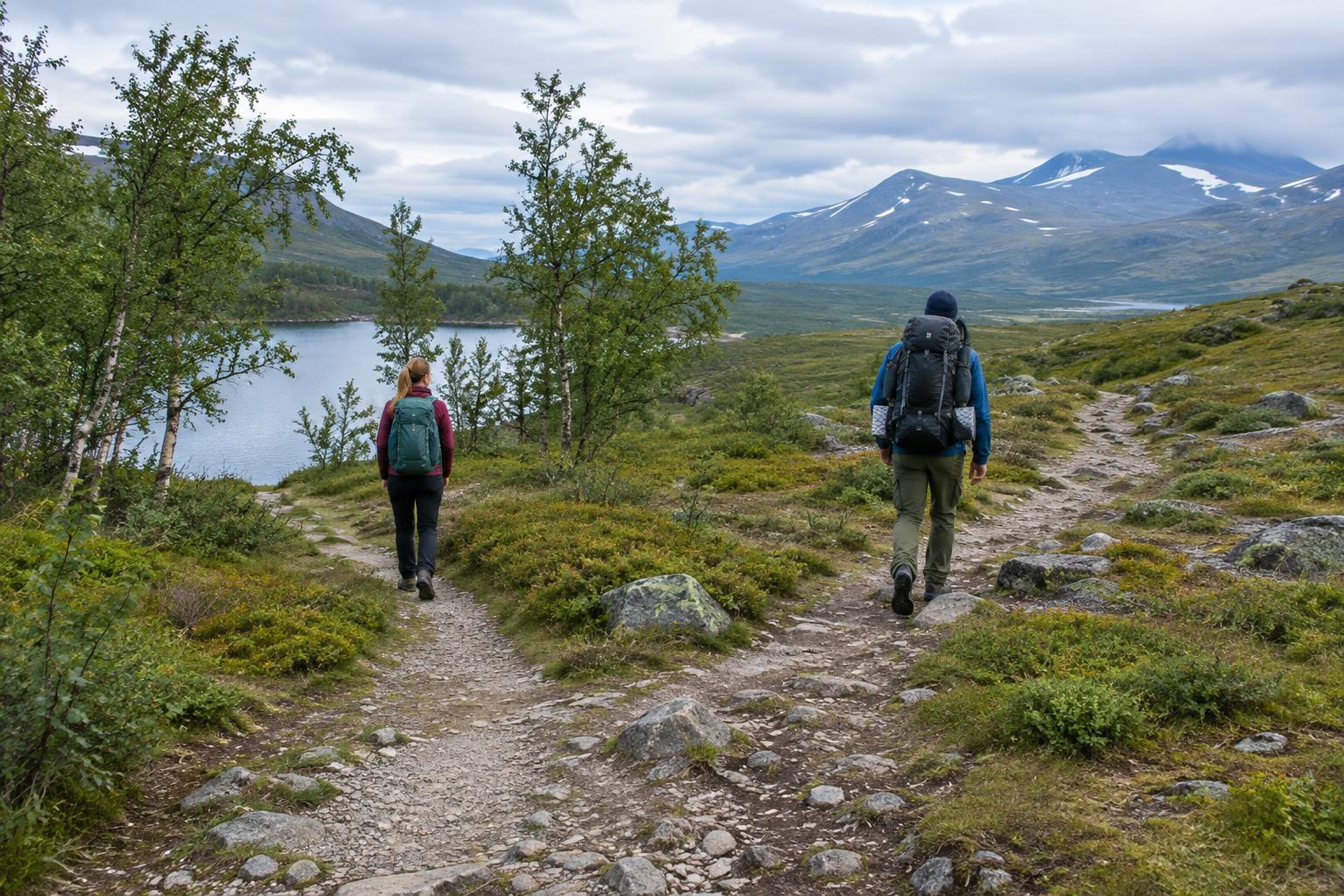
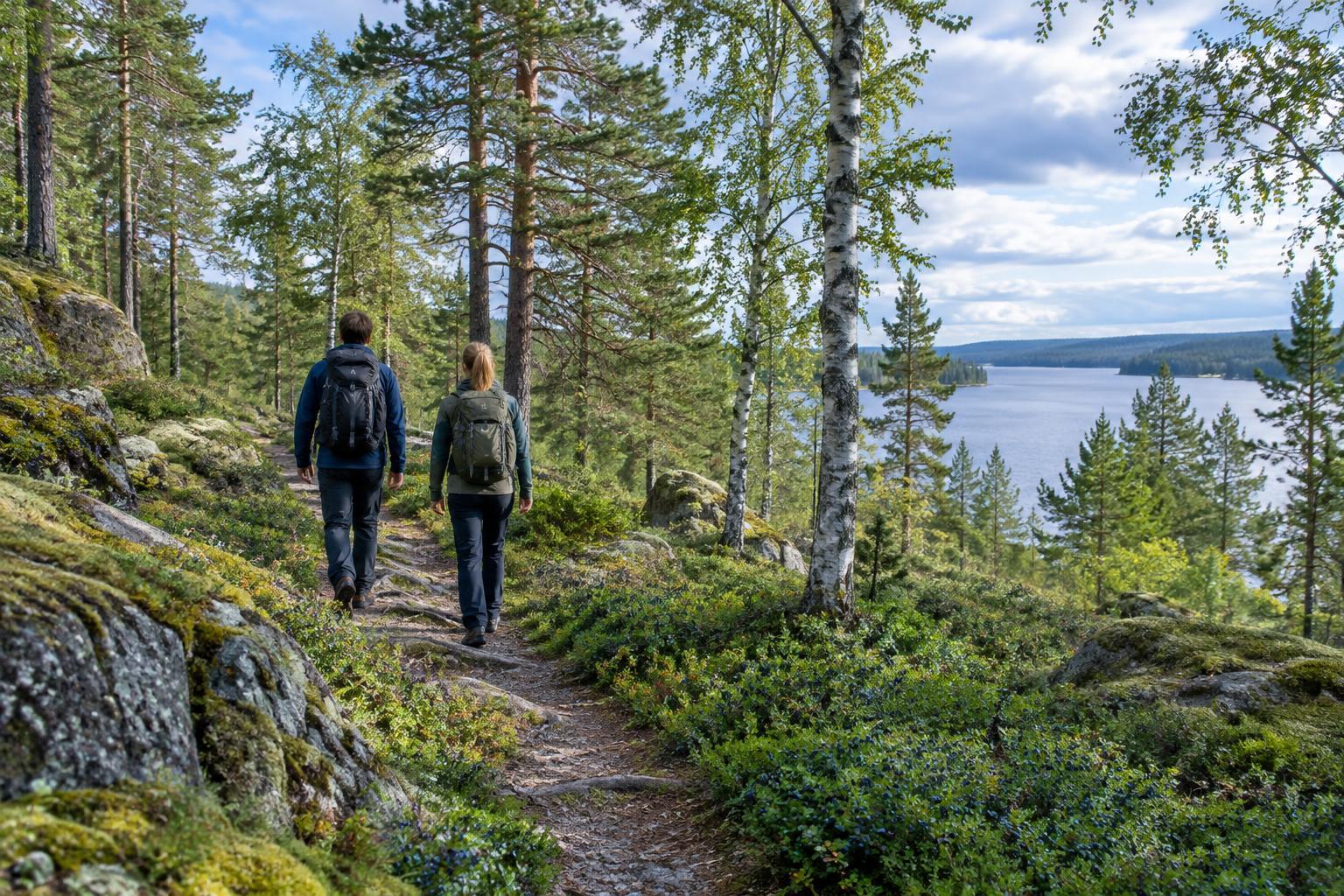
Forest paths and uncultivated land are natural places to explore. You do not generally need to find a public trail to enjoy a walk, but staying on established routes can make navigation easier and reduce wear on the ground. Close gates behind you, avoid trampling young plants and give grazing animals a wide berth.
Keep a respectful distance from houses and gardens. The area immediately around a home is private even if there is no fence or sign; if your presence might intrude on someone’s ordinary use of their home, choose another route. Do not cross planted fields or other land where your footsteps could damage a crop. When a route is unclear, turning back is better than pressing through.
Plan for the conditions as well as the route. A quiet-looking track can become muddy, and daylight or phone reception may be limited in remote places. Carry what you need to find your way back, and let someone know your plans for a longer outing.
Camping lightly and choosing a spot
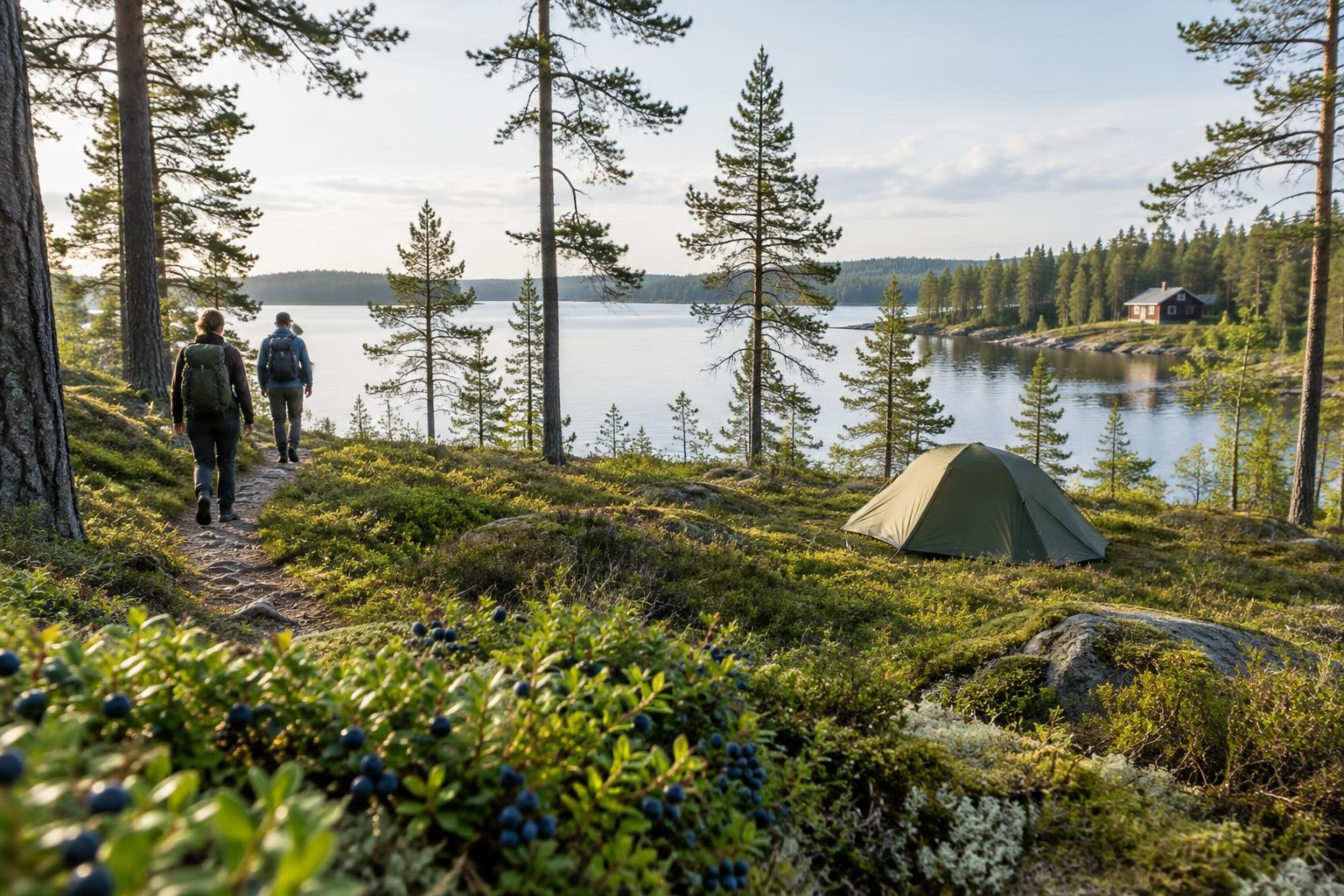
A small tent for a short stay may be possible in many places, provided you camp well away from homes and leave the area undisturbed. The more people, tents or nights involved, the more important it is to check what permission or local rules may be needed. Protected areas can have their own camping rules, including designated sites or bans.
Choose durable ground rather than fragile vegetation, and avoid blocking paths or access to water. Pack out all litter, including food scraps, and leave the site as you found it. Use a toilet where one is available; otherwise, manage waste carefully and well away from water, paths and campsites.
Do not assume a campfire is allowed. Fire restrictions can change with conditions, and a fire can harm roots and rock surfaces even when it seems safely contained. Check local information before considering one. A stove used with care is often a simpler choice, but it, too, needs safe handling.
Foraging without taking too much
Picking common wild berries and mushrooms for personal use is part of many people’s experience of the Swedish outdoors. Take only what you can identify confidently and use. Some plants and places are protected, so check local rules before collecting unfamiliar species or foraging in a reserve.
Leave growing trees, shrubs and their bark intact. Rather than clearing one patch, take modest amounts and leave plenty for wildlife and other visitors. If you are unsure whether a plant can be picked—or whether you can identify a mushroom safely—leave it where it is. A photograph can be a satisfying find in its own right.
Make room for others
Allemansrätten works best when each visitor thinks beyond their own trip. Keep noise down near homes and other walkers, control dogs around wildlife and livestock, and take extra care during nesting and breeding seasons. Swimming and paddling call for the same consideration: avoid private areas around homes and do not disturb wildlife along the shore.
Before setting out, look for posted notices and check the rules for the particular park, reserve or destination you plan to visit. If a sign or boundary makes you uncertain, choose the less intrusive option. The reward is not just access to a beautiful place, but the chance to help keep it welcoming for the next person.