Start with the journey through the door
A useful entryway makes arriving home feel simple: come in, take off outdoor shoes, hang up a coat and put small essentials where they belong. In a Swedish-style space, that practical sequence matters more than achieving a particular look. Pale colours, natural materials and uncluttered surfaces can make the area feel calm, but they work best when the storage fits your household’s routines.
Watch what happens when people enter. Where do damp shoes land? Does a bag block the door while someone removes a coat? Place the things used first closest to the entrance, leaving enough clear floor for people to pass. If the entry opens straight into a living area, a washable rug, low shoe shelf or narrow bench can establish a drop zone without building a wall.
Sweden Culture Guide is an independent culture magazine, not a consulate or government service. Here, Swedish style is a source of practical design ideas rather than a set of rules every home must follow.
Give wet shoes a place to stop
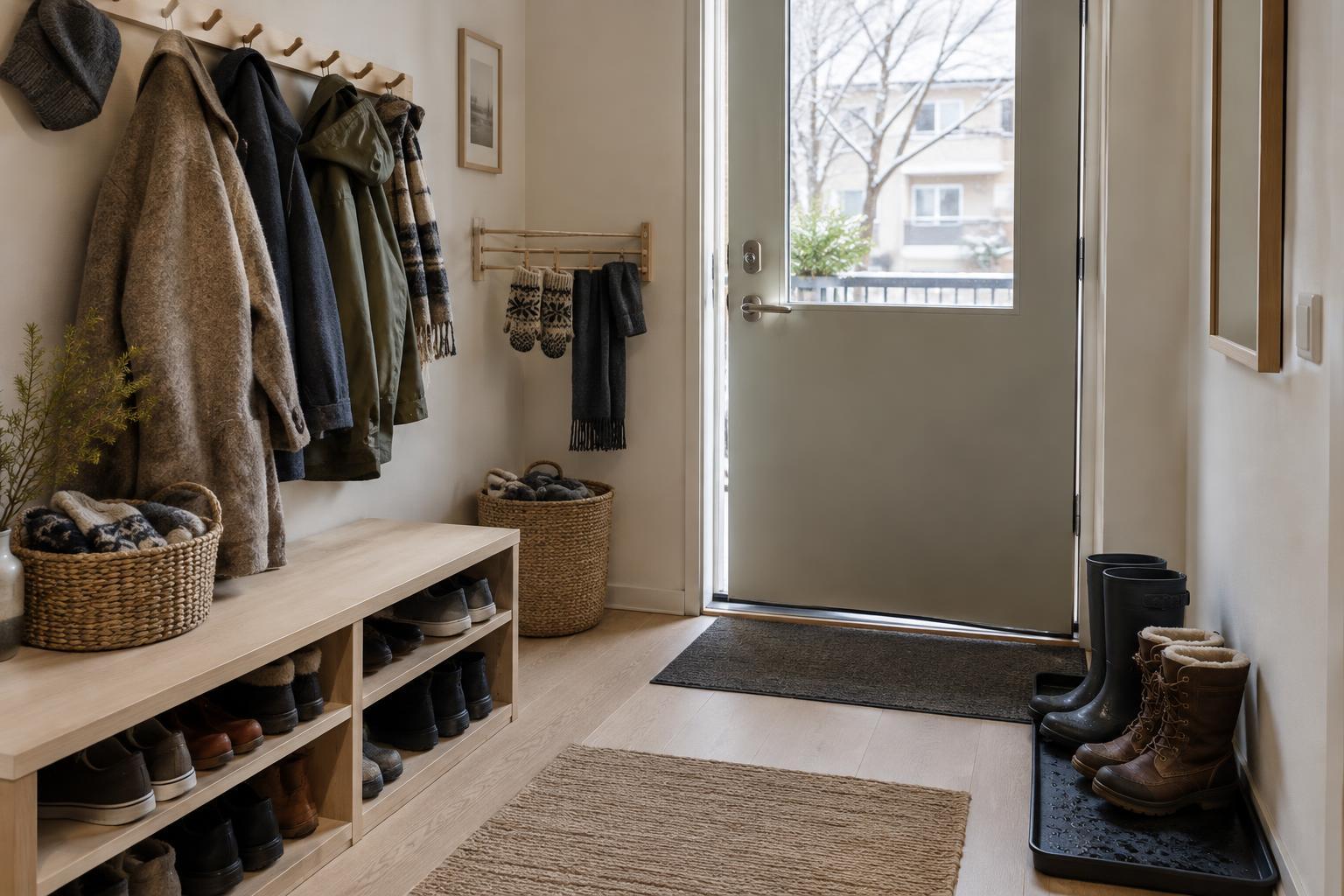
Winter footwear can bring in water, grit and slush. Put a durable, easy-to-clean mat just inside the door and choose a size that allows someone to stand on it while removing shoes. A second mat outside can catch some dirt before it enters, where your doorway allows one. Check that mats lie flat and do not interfere with the door.
A shoe tray or washable boot mat contains drips better than an open shelf. Leave a little room between pairs so air can circulate, and avoid packing wet boots straight into a closed cupboard. Once shoes are dry, move less-used pairs to a shelf or cabinet. Keeping only the pairs worn regularly by the door prevents the floor from becoming permanent storage.
A bench makes changing footwear easier, especially when boots take time to remove. In a tight hall, consider a slim seat with shoe space beneath it, or a sturdy stool that can be moved aside. Whatever you choose, keep the walking route clear.
Make coat storage fit real life
Hooks are quick to use and let damp coats hang more freely than a crowded rail. Set some at a comfortable height for children or anyone who finds high hooks difficult to reach. If several people share the space, assign each person a hook or a small section of rail. That makes it easier to notice when too many jackets have accumulated.
Reserve enclosed storage for dry, out-of-season outerwear if you have it. A narrow wardrobe can hide visual clutter, but it should not be so full that coats cannot dry or be retrieved easily. In an open entryway, matching hangers or a restrained mix of hooks can create order without requiring every jacket to look identical.
Plan for accessories at the same time as coats. A basket for each person’s hats and gloves, a tray for keys, and a dedicated spot for scarves reduce the last-minute search before going out. Choose containers you can lift out and clean; winter gear often arrives home damp or dusty.
Create a drying routine, not just more storage
The distinction between wet and dry storage is especially useful in colder weather. Give damp gloves, hats and scarves a temporary place to dry before they go back into baskets or drawers. That might be a few spare hooks, a small rail or a washable surface nearby. Spread items out rather than piling them together, and follow the care labels for delicate fabrics.
If the entryway is poorly ventilated, move very wet items to another suitable drying area instead of leaving them against a wall or inside a closed cabinet. Wipe up standing water from shoe trays and floors. A simple routine at the end of the day helps protect surfaces and keeps tomorrow’s gear ready to use.
Keep the finish calm and the system flexible
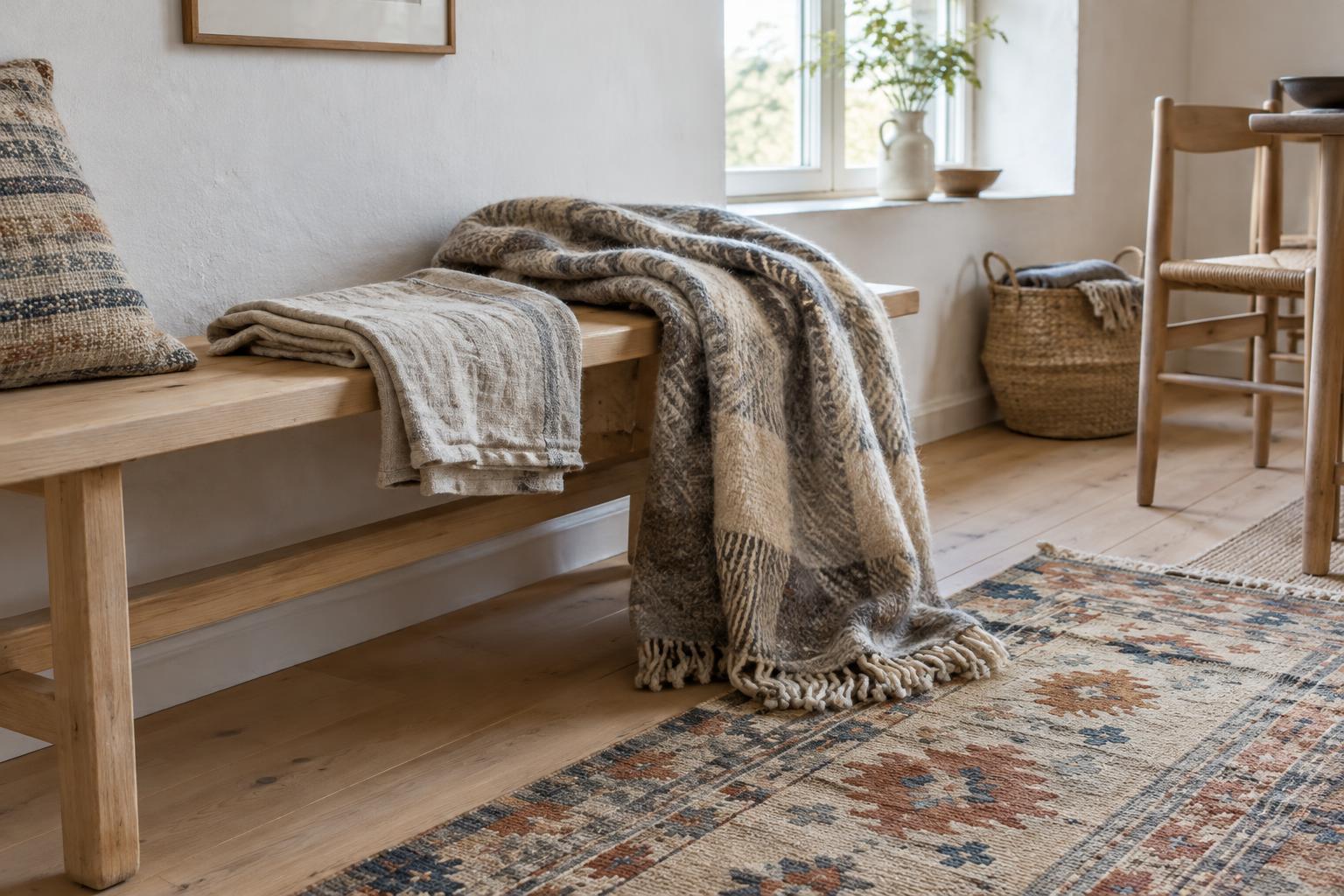
A Swedish-inspired entryway need not be entirely white or newly furnished. Light walls can help a narrow hall feel open, while wood, woven baskets and a durable floor mat add warmth. Good lighting is just as important: make sure you can see shoe storage, hooks and keys on dark mornings. Choose finishes that tolerate frequent cleaning, particularly near the door.
Start with the smallest changes that solve a daily problem. Move spare shoes elsewhere, add one reliable mat, then test whether you need a bench, more hooks or better accessory storage. Renters can look for freestanding pieces or removable solutions suited to their walls and lease. Revisit the setup as seasons change: the best entryway is one that stays easy to use when bulky winter layers give way to lighter ones.