What is a julbord?
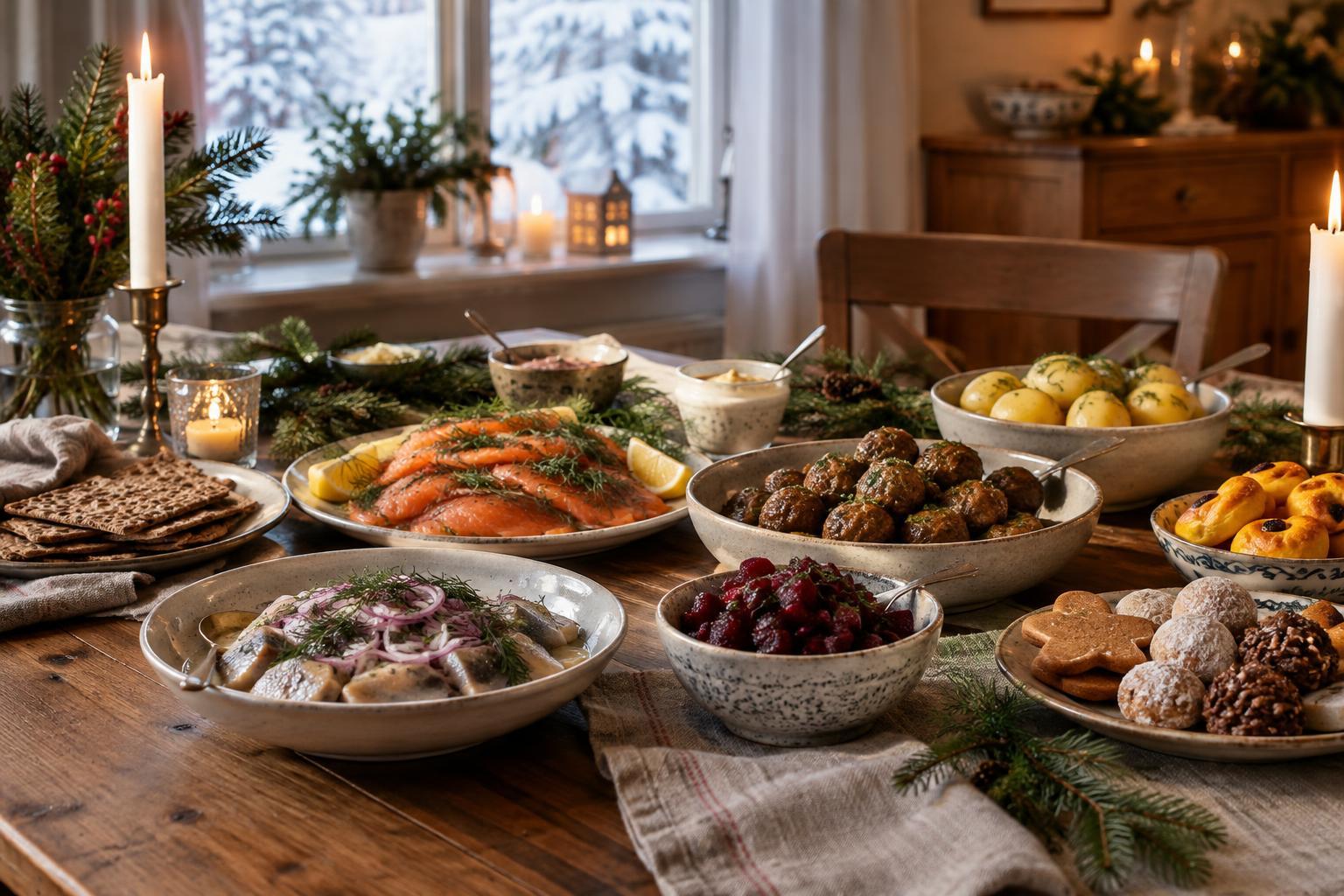
Julbord means “Christmas table,” and the name captures the spirit of the meal: a generous spread of dishes shared over time. It is a seasonal version of the Swedish smörgåsbord, served in homes, restaurants and other gathering places during the Christmas period. Some tables are elaborate, while others feature only a handful of family favorites. There is no single menu that every household follows.
Think of a julbord as a meal in several visits to the table rather than one overflowing plate. Cold fish, meats, warm dishes, cheese and sweets are often grouped separately. Guests can return for small portions as the meal unfolds. That relaxed rhythm makes it easier to appreciate flavors that might seem unusual at first, especially the sweet-and-sour notes of pickled herring.
Sweden Culture Guide is an independent magazine about Swedish life, not a consulate or government service. Here, the focus is simply on understanding a food tradition and feeling comfortable around the table.
Start with the cold dishes
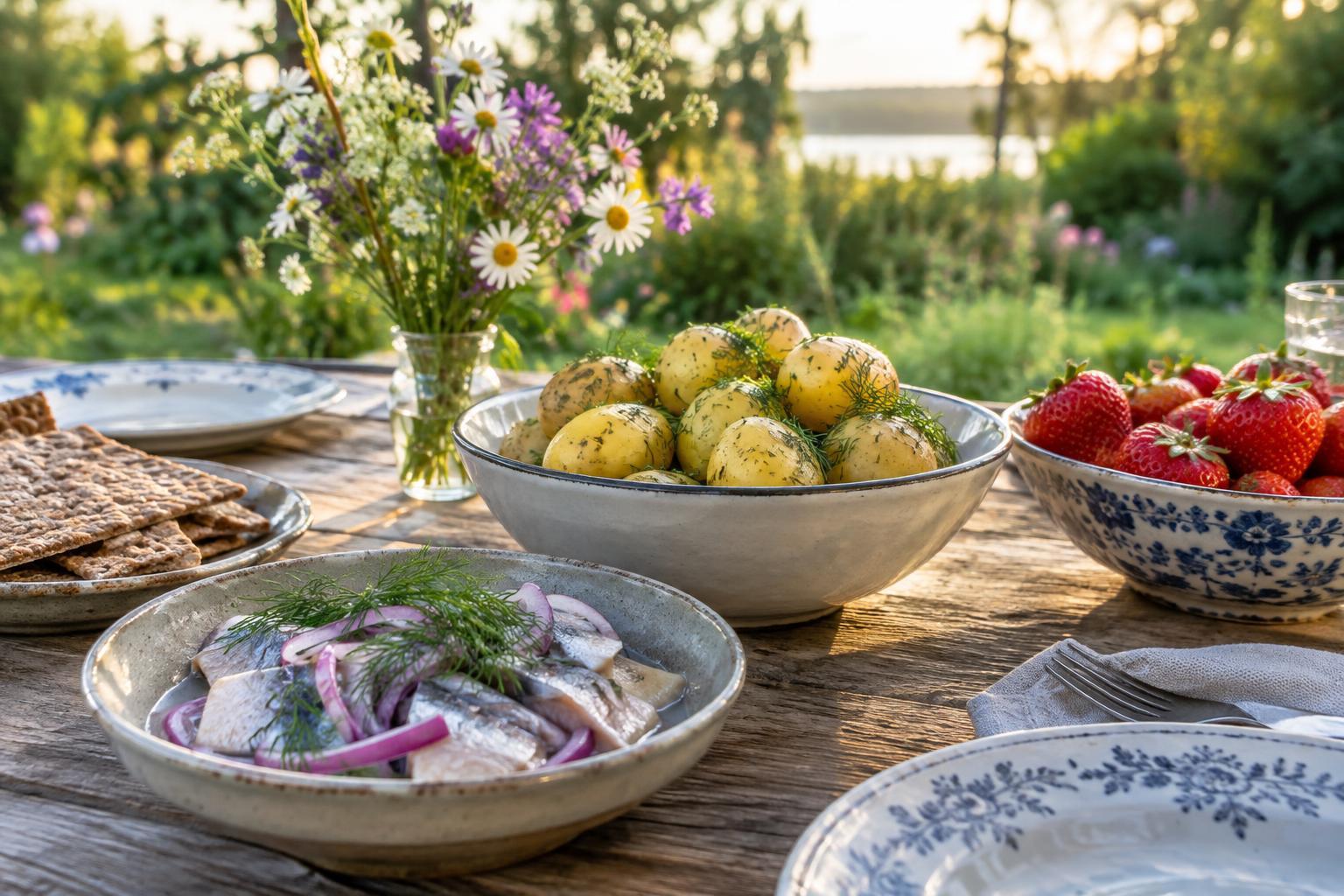
Pickled herring is a familiar starting point at many julbord tables. You may see several versions, with mustard, onion or creamy sauces. Small portions are sensible for a first taste: the preparations can differ considerably, even when the main ingredient is the same. Boiled potatoes, bread and butter often sit nearby and provide a mild balance.
Other cold fish may include gravlax, salmon cured with salt, sugar and dill, served with a sweet mustard-dill sauce. Smoked salmon is another possibility. Cold meats such as Christmas ham, or julskinka, may appear with mustard. A table might also offer pâté, sliced sausage, beetroot salad or crispbread. The selection reflects the host’s preferences as much as any fixed tradition.
If you do not eat fish or meat, scan the whole table before filling your plate. Potatoes, bread, salads and cheeses may offer choices, but ingredients are not always obvious. Herring sauces, for example, may contain dairy, and some dishes that look like potato bakes contain fish. When in doubt, ask the host or serving staff what is in a dish.
Make room for the warm favorites
A later trip to the buffet often centers on warm food. Swedish meatballs and small sausages called prinskorv are common favorites. You may also find red cabbage or other cooked vegetables. These dishes can feel more familiar to a newcomer, but they are only one part of the julbord; taking a little of each leaves room to explore.
Jansson’s temptation, or Janssons frestelse, is a potato casserole with onion, cream and Swedish ansjovis. Despite the name’s resemblance to “anchovies,” the ingredient used in Sweden is typically a spiced, preserved sprat. Its savory flavor is part of the dish, so it is worth checking before trying it if you avoid fish. Some families serve additional specialties, but not finding a particular dish on the table does not make the meal any less of a julbord.
The buffet is not a test of endurance. You can skip a course, return to something you liked or stop when you are full. Hosts generally want guests to enjoy the gathering, not to complete a checklist.
Drinks, sweets and the pace of the meal
Julmust, a dark, sweet soft drink associated with the Christmas season, is a common nonalcoholic choice. Beer and snaps may also be offered, sometimes alongside songs or toasts, depending on the gathering. Drinking alcohol is not a requirement for taking part. Water or another nonalcoholic drink is a perfectly ordinary choice.
Dessert varies widely. A table might feature rice porridge, ginger biscuits, saffron buns, chocolates or other homemade sweets. Rice porridge can be served as a dish in its own right or appear in a chilled dessert. Because a julbord includes so many savory courses, it helps to save a little appetite if you want to try the sweet end of the table.
Meals at home can be especially flexible. Some hosts bring out dishes in stages; others set everything out at once. Follow the host’s lead, use the serving utensils provided and take modest first portions when many people are sharing the spread. You can usually go back for more.
How to enjoy your first julbord
Before taking a plate, have a look at what is available. A simple approach is to begin with cold fish or other cold dishes, move on to warm food, then finish with cheese or sweets if offered. This is a helpful pattern, not a strict rule. If you are unsure where to begin, watching how others serve themselves can provide an easy cue.
The most useful expectation is variety rather than uniformity. A restaurant may present many small dishes; a family might concentrate on the foods its members love. Regional habits, dietary needs and personal taste all shape the table. Try what appeals to you, ask about unfamiliar ingredients and make space for conversation. The pleasure of a julbord lies as much in lingering together as in what is on the plate.